
Back to Blog
Learning6 October 2026 Shraddha TekurkarLinkedIn

Signs of readiness for structured baby classes in Reading

Identifying readiness for a structured early learning program involves observing everyday behavioral cues rather than testing academic milestones.

Signs of readiness for structured baby classes in Reading

Quick answer: Readiness for structured baby classes in Reading is not about reciting facts, but rather displaying natural curiosity, focus, and a desire for shared play. When a child begins asking constant questions, seeking your attention during activities, and following simple instructions, they are signaling that their developing brain is hungry for targeted cognitive stimulation.

Recognizing the Need for Structured Early Learning

Parents often question whether their child is receiving the right kind of cognitive stimulation at the correct developmental stage. Identifying readiness for a structured early learning program involves observing everyday behavioral cues rather than testing academic milestones. Recognizing these natural signals helps families transition from standard childcare to targeted cognitive development seamlessly.

Core Behavioral Signs of Cognitive Readiness

A child's readiness for structured learning manifests through persistence, early problem-solving, and a desire for connection. Here are the clear indicators that your child's brain is prepared for guided stimulation:

  • Constant questioning: Asking "why" and "what's that" builds foundational neural connections for memory, language, and problem-solving.
  • Activity repetition: Returning to the same puzzle or sorting game repeatedly is a sign of active mastery in progress, not boredom.
  • Sustained focus: Concentrating on a single task for a few minutes at a time indicates a rapidly expanding attention span.
  • Following two-step instructions: Executing requests like "pick up the blocks and put them in the box" demonstrates active working memory.
  • Desire for demonstration: A willingness to watch, copy, and try new things shows trust and a strong readiness for guided learning.
  • Seeking shared attention: Bringing you toys or discoveries regularly signals a natural instinct for joint focus and interaction.
  • Early problem-solving: Trying different approaches to open a lid or reach an object highlights the beginnings of flexible thinking.
  • Pattern recognition: Lining up toys or matching colors underpins the critical early stages of maths and reading abilities.
  • Thriving on routine: Settling easily into predictable formats gives children the emotional security needed to tackle new challenges.
  • Outgrowing standard childcare: Showing a capacity for targeted growth where parents are active participants, rather than sideline observers.

Standard Childcare vs. Structured Cognitive Classes

Understanding the difference between general supervision and an intentional cognitive curriculum helps parents make informed decisions about their child's early education.

Standard Childcare Environment Structured Cognitive Classes
Focuses primarily on general supervision and unstructured free play. Focuses on targeted cognitive milestones, memory retention, and brain development.
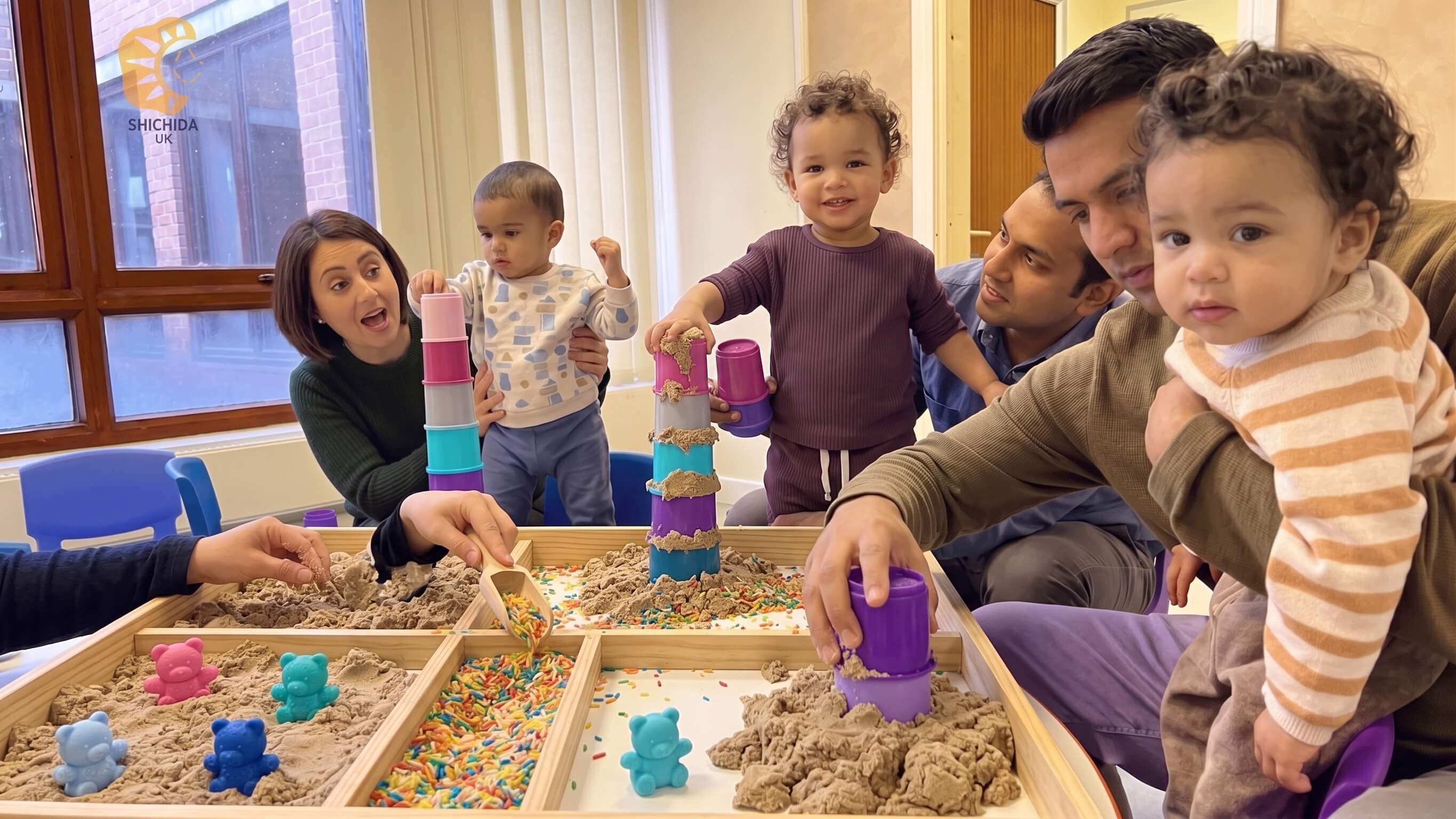
Parents are separated from the child and observe from the sidelines. Parents actively participate on the mat alongside their child to foster emotional security.
Skill repetition happens randomly based on available toys and peer interaction. Skill repetition is intentional, designed to master focus, logic, and pattern recognition.

What Readiness Really Means for Your Child

Readiness requires matching a child's current developmental stage with the appropriate level of stimulation to help them flourish without pressure. The goal is to offer structured activities that feel like joyful, engaging play. Finding the right baby classes in Reading ensures your child receives whole-brain activities that develop memory, creativity, and lasting confidence.

Taking a Gentle Next Step

If you recognize these cognitive signs in your toddler, a structured parent-and-child class provides the perfect environment for their natural curiosity to grow. The Shichida Method offers a weekly 60-minute program designed specifically for children from 6 months to 6 years of age. You stay beside your child throughout the session, ensuring that learning and emotional bonding happen simultaneously. Families can easily explore our toddler classes to see how these foundational skills are nurtured progressively.


Frequently Asked Questions

How do I know if my child is ready for baby classes in Reading?

Readiness looks like natural curiosity, such as asking constant questions, seeking your attention, and focusing on repeated activities. If your child can successfully follow simple two-step instructions, they are well-prepared for a structured program.

Does my child need to be academically advanced to start a cognitive program?

No, children do not need to be advanced or competitive to begin structured early learning classes. The goal is simply to match their current curiosity and developmental stage with appropriate, play-based stimulation.

Why do children repeat the same activities constantly?

Repetition is how young brains master new skills, build strong neural pathways, and establish confidence. Structured classes utilize this natural learning loop to improve memory and focus without causing boredom.

What is the role of parents in Shichida early learning classes?

Parents actively participate alongside their child for the entire 60-minute session. This shared focus ensures that robust cognitive development and deep emotional bonding happen simultaneously.


Sources & Further Reading

For parents looking to understand the cognitive and behavioral milestones that signal a child's readiness for structured learning, explore the following trusted resources:

  1. Centers for Disease Control and Prevention (CDC). Early Childhood Developmental Milestones and Cognitive Cues.
  2. Harvard University Center on the Developing Child. Serve and Return: How Interactive Play Shapes Brain Architecture.
  3. Zero to Three. Early Learning, Repetition, and Building Toddler Confidence.
  4. National Institute of Child Health and Human Development (NICHD). The Science of Early Learning and Pattern Recognition.

Keep the conversation going

Discuss this article with AI

Shraddha Tekurkar, Executive Director and Curriculum Head at Shichida UK

Written by

Shraddha Tekurkar

Executive Director & Curriculum Head, Shichida UK

Shraddha Tekurkar leads curriculum development at Shichida UK and is certified directly through Shichida HQ in Japan. Her work focuses on developing engaging learning activities for young children within the Shichida approach.

Learn more about the Shichida UK team →