Parenting15 Mar 2022
Five Shichida Activities You Can Do at Home Today
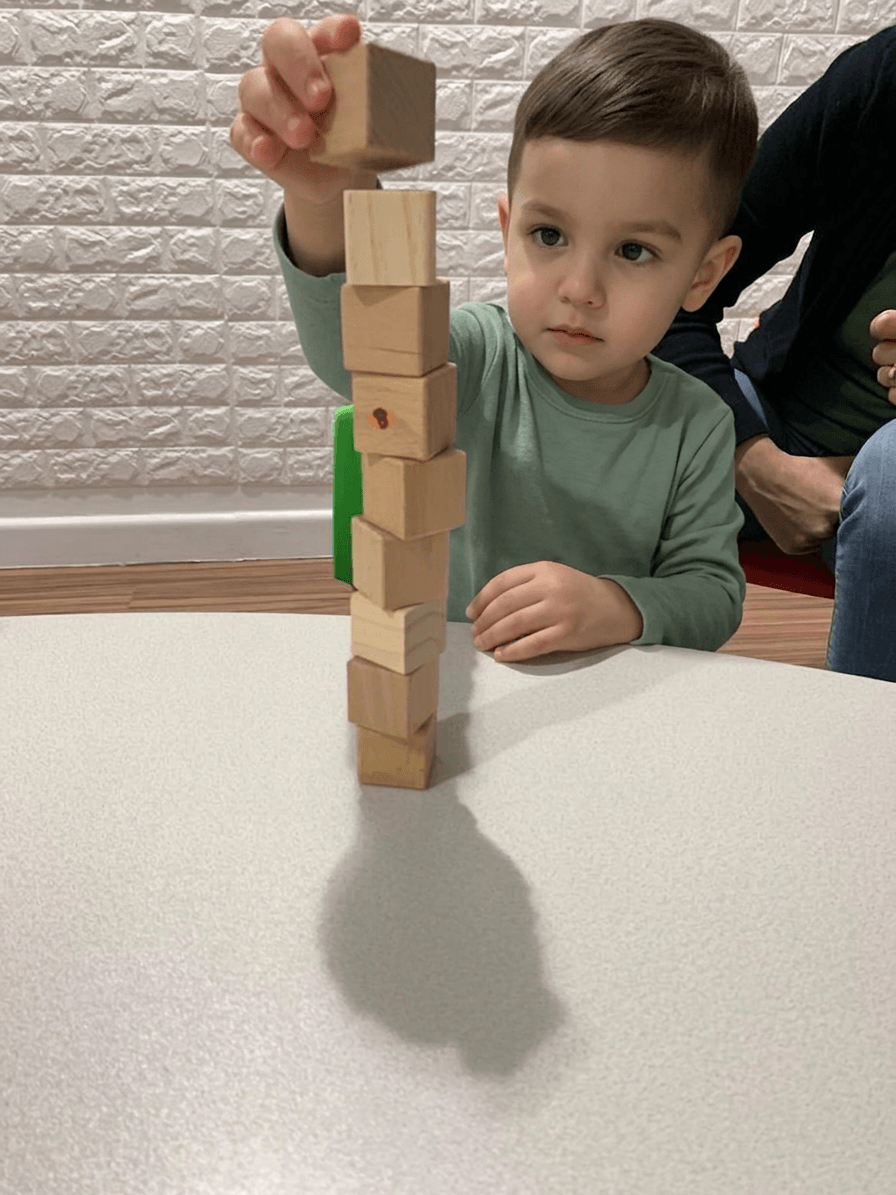
Practical, tested cognitive development activities from our classroom, adapted for a kitchen table and a five-minute window.
Read more
Parent participation is not a nice extra at Shichida. It is a structural part of how early cognitive development works in our classes.
Quick answer: Parents attend Shichida classes because the Shichida Method is designed around active parent or caregiver participation. During the 60-minute class, the accompanying adult stays alongside the child, takes part in activities, and learns techniques that can be continued at home. Shichida's approach is therefore intended to connect classroom learning with everyday parent-child interaction.
One of the most common questions new families ask is: “Why do parents have to attend Shichida classes?”
The short answer is that parents are not expected to be spectators. In the Shichida Method, the accompanying adult is part of the learning environment and is also shown how activities can be continued outside the classroom.
This article explains why Shichida UK uses this approach, what parents actually do during a class, and what broader research says about responsive adult-child interaction and play.
Parents attend Shichida classes for three main reasons:
This means the parent is not simply observing what happens in the classroom. The aim is for the parent and child to experience the activities together and for the parent to understand how the approach is intended to work beyond the weekly session.
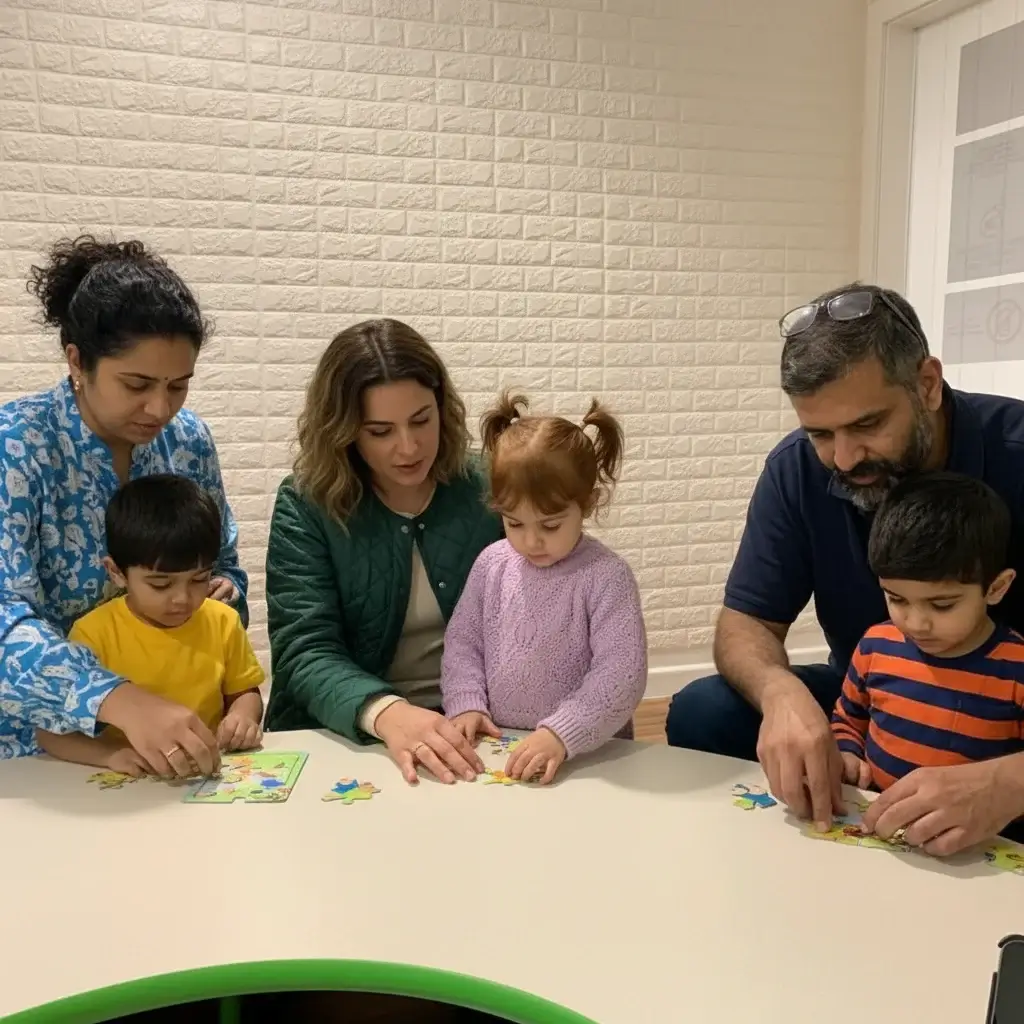
At Shichida, you sit alongside your child for the full 60-minute class. Rather than leaving your child with the teacher and returning later, you participate in the classroom experience.
This is a deliberate part of the Shichida Method. The teacher demonstrates activities, while the accompanying adult observes, participates and learns how to support the child.
Young children learn within relationships. Research from Harvard University's Center on the Developing Child describes responsive, back-and-forth interactions between children and caring adults—often called “serve and return” interactions—as an important part of children's early developmental environment.
These interactions involve a child communicating through sounds, gestures, facial expressions or actions and an adult responding appropriately. Harvard's research resources explain that these responsive exchanges support early social, emotional and language development and contribute to the development of brain architecture.
Shichida's use of a parent or familiar caregiver alongside the child reflects the importance the programme places on an engaged adult-child relationship.
Read Harvard's research on serve and return interactions →
A 60-minute weekly class represents only a small part of a child's week. One reason Shichida asks parents to participate is so that they can understand the activities and approach used in the classroom and continue suitable activities at home.
Depending on the child's age and programme, this may include activities involving memory, visual attention, language, listening, movement, play and other forms of cognitive engagement.
Parents can therefore learn more than simply what activity the child is doing. They can also observe how the teacher presents it and how the child responds.
For parents, this can make the weekly class more practical: rather than simply hearing that an activity happened, they see it being demonstrated and can ask the teacher questions about how to approach it.
Parents can also explore ways to support learning at home between classes.
Learning is not only about completing an activity correctly. Young children also experience learning through relationships, play, encouragement and shared attention.
The American Academy of Pediatrics reports that developmentally appropriate play with parents and peers can support social-emotional, cognitive, language and self-regulation development. Its clinical report, The Power of Play, was reaffirmed in 2025.
Read the American Academy of Pediatrics report on the power of play →
Shichida's approach builds shared parent-child participation into the classroom experience. The intention is to make learning an activity that the child and adult experience together rather than something that happens separately from the parent.
It is useful to separate two different questions:
The first question has a substantial research base. Harvard's Center on the Developing Child describes responsive, back-and-forth interactions with caring adults as important to early development, while the American Academy of Pediatrics highlights developmentally appropriate play with parents and peers as an opportunity to support multiple areas of development.
These sources provide context for why an engaged adult-child relationship can be valuable during early childhood learning.
The research cited in this article supports broader principles such as responsive interaction, relationships and developmentally appropriate play.
The distinctive feature of the Shichida classroom is not simply that a parent is physically present. The parent is expected to participate in the experience and learn how the programme's activities are presented.
This creates a connection between three parts of the learning experience:
Teacher demonstrates activities and the child participates with a parent or familiar adult.
The accompanying adult observes the teaching approach and learns how activities are used.
Families can continue suitable activities and learning interactions as part of everyday life.
The difference is important. Shichida is designed around an accompanying adult who participates rather than simply dropping a child off and returning later.
| Passive Observation | Active Participation at Shichida |
|---|---|
| Parent is separate from the classroom activity. | Parent sits alongside the child during the session. |
| Parent may only hear afterwards what happened in class. | Parent sees the activities being demonstrated first-hand. |
| Learning may remain largely within the classroom. | Parents can learn activities and approaches that may be continued at home. |
| Teacher is the main person interacting with the child. | Teacher, child and accompanying adult participate in the learning environment together. |
Families do not necessarily need the exact same adult to accompany the child every week. What matters for the Shichida classroom is that the child is accompanied by a familiar adult who is able and willing to participate.
Many families alternate between parents, while grandparents or other familiar caregivers may also accompany a child. If a different adult will be attending, it is helpful to let the instructor know beforehand so the transition can be handled smoothly.
If you are considering Shichida for your child, you can learn more about what to expect in a Shichida class or contact Shichida UK about a trial class.
For many families, the value of attending the class is not limited to the hour spent in the classroom. Parents also gain a clearer understanding of the activities their child is experiencing and how the programme is intended to connect with home life.
Yes. Shichida classes are designed around active participation by a parent or familiar accompanying adult. The adult sits alongside the child for the 60-minute session and takes part in the classroom experience.
A grandparent or other familiar caregiver can accompany a child where appropriate. The important consideration is that the accompanying adult is familiar to the child and able to participate actively in the class. If someone different will be attending, let your instructor know beforehand.
Parent participation allows adults to see how activities are presented and understand how the Shichida approach is intended to continue beyond the weekly classroom session. Parents can then use suitable activities and learning interactions at home.
Research supports the importance of responsive adult-child interaction and developmentally appropriate play. For example, Harvard's Center on the Developing Child describes responsive “serve and return” interactions as important to early development, while the American Academy of Pediatrics highlights play with parents and peers as supporting social-emotional, cognitive, language and self-regulation development.
Yes. One purpose of parent participation is to help adults understand the activities used in class so that suitable learning interactions can continue at home. Your instructor can advise you on activities appropriate for your child's programme and stage.
No. Shichida is a specific educational method with its own classroom structure and activities. Some broader principles relevant to early childhood learning—such as responsive interaction, play and parent-child engagement—are also discussed in independent developmental research. Those broader principles should not be confused with independent validation of the Shichida Method as a whole.
The following sources provide independent background on early childhood development, responsive adult-child interaction and play.
Editorial note: The independent sources above provide evidence about broader principles of early childhood development, including responsive interaction and play. They are not presented as independent clinical or scientific validation of the Shichida Method itself.
Explore the topic further

Written by
Executive Director & Curriculum Head, Shichida UK
Shraddha Tekurkar leads curriculum development at Shichida UK and is certified directly through Shichida HQ in Japan. Her work focuses on developing engaging learning activities for young children within the Shichida approach.
Keep Reading
Practical, tested cognitive development activities from our classroom, adapted for a kitchen table and a five-minute window.
Read more
Six children, no exceptions. The reasoning behind one of our strictest rules.
Read more
Sixty years of early years research, condensed into an hour a week. Here is what the Shichida Method actually is as an approach to early cognitive development, and what it is not.
Read more