Development21 Nov 2023
Speech and Language: Supporting Early Talkers
From first sounds to full sentences — how language really develops in the early years, and how to give it room.
Read more
What photographic memory really means in early years cognitive development, what it does not mean, and why it fades if unused.
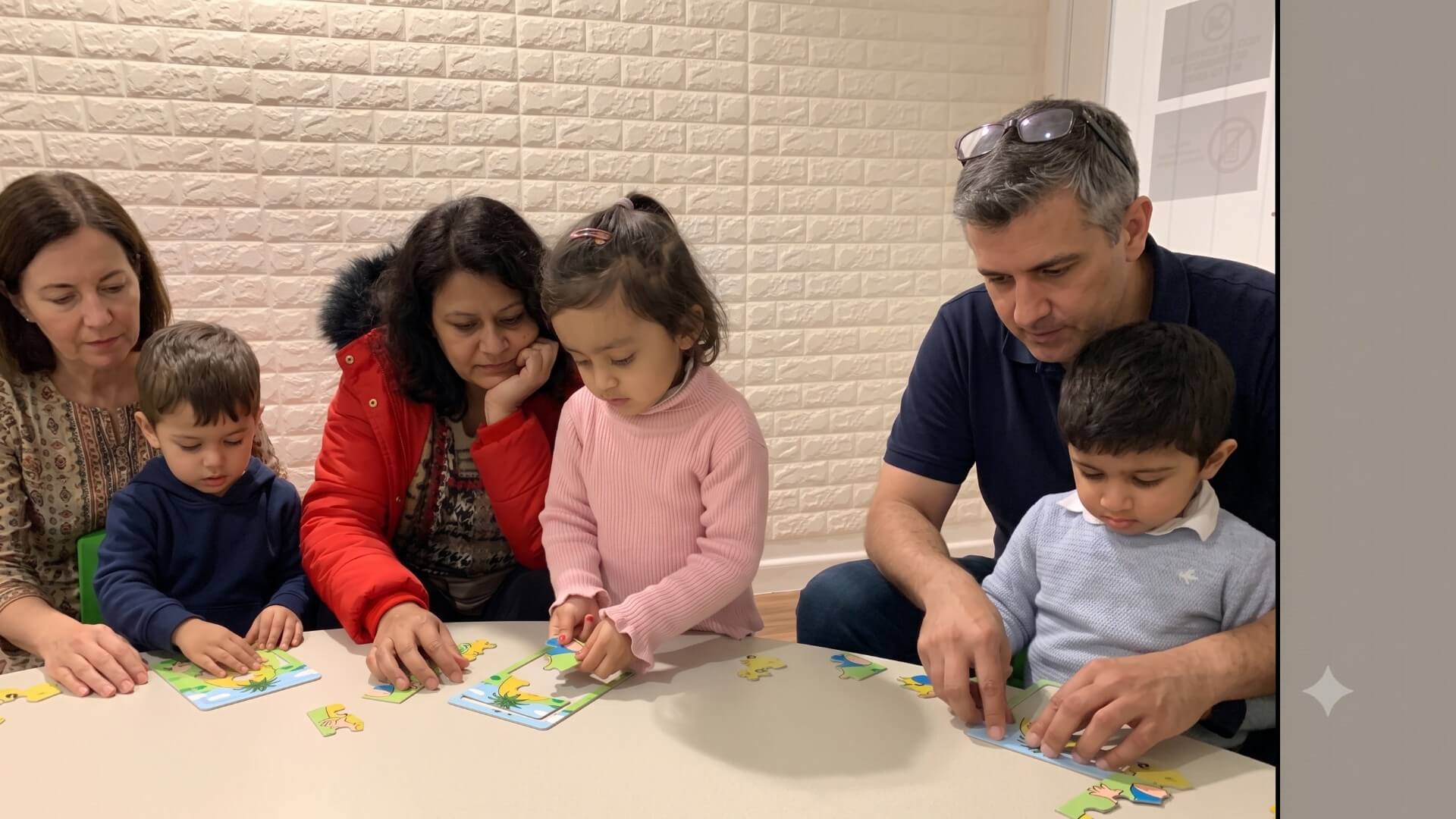
The phrase photographic memory carries a lot of baggage. In the context of early childhood it describes something real but more modest than the myth: very young children retain vivid, image-based impressions with remarkably little effort, and recall them without conscious strategy.
As language becomes dominant, children increasingly convert experience into words and store the summary rather than the picture. That is an efficient adaptation, and it is also why most adults cannot do what a two-year-old does effortlessly. Capacities that are not used are quietly pruned.
This is what the rapid visual work in class is for. By regularly exercising whole-image processing during the years it comes naturally, children keep the channel available alongside their developing verbal skills — rather than trading one for the other.
Not a child reciting a phone book. More often: noticing that a picture on the wall has moved, recalling the exact route to the park, spotting the odd one out in a group instantly, or reproducing a pattern of beads from memory.
Play spot-the-difference. Rearrange three objects and ask what changed. Look at a picture together for ten seconds, turn it over, and ask questions about it. Keep the tone light — recall works far better in a relaxed child than a tested one.
Curious to see it for yourself? The easiest way to understand a Shichida class is to sit in one. Message our team on WhatsApp to book a trial class and we will help you choose the right stage for your child.
For readers who would like to explore the wider science of early years cognitive development, the following authoritative organisations offer trusted further reading:
Keep Reading
From first sounds to full sentences — how language really develops in the early years, and how to give it room.
Read more
The part of the Shichida Method that has nothing to do with memory, and everything to do with the emotional side of early cognitive development.
Read more
Everything you need to know before your first early years cognitive development class — how to book, what to bring, and what happens on the day.
Read more