Parenting13 Aug 2024
The Power of Positive Affirmation Before Sleep
Five minutes at bedtime, done consistently, may be the highest-value habit in the whole method.
Read more
A parent's guide to the most effective early childhood cognitive development programs in the UK, including the Shichida Method, Incredible Years, BrightMinds, Peeple, and Montessori.
Quick answer
The most effective cognitive development programs for young children in the UK combine structured parent-child interaction, age-appropriate stimulation of both brain hemispheres, and evidence-aligned early years practice. The leading options include the Shichida Method, Incredible Years, BrightMinds, and Peeple’s approaches — each with different strengths depending on your child’s age and your goals.
Cognitive development refers to how children learn to think, reason, remember, and solve problems. Between birth and age six, the brain forms approximately 1 million new neural connections every second — a rate it will never match again. This is the window when structured, responsive stimulation has the greatest and most lasting impact on a child’s capacity for memory, focus, language, and emotional regulation.
The UK’s Early Years Foundation Stage (EYFS) framework recognises cognitive development as central to school readiness, but most nursery settings alone cannot provide the depth of individual, parent-child engagement that research consistently shows drives the strongest outcomes.
When evaluating early childhood programs, the Education Endowment Foundation (EEF) and the Nuffield Foundation point to several consistent markers of effectiveness:
1. The Shichida Method (Shichida UK)
Best for: 6 months to 6 years · Parent-child weekly classes · Whole-brain development
Shichida is a structured early years program based on the research of Professor Makoto Shichida, who studied how the right hemisphere — dominant in early childhood — processes information at extraordinary speed and depth. The method was developed in Japan in 1958 and is now practised across Asia, Australia, the United States, and the United Kingdom.
What the program covers
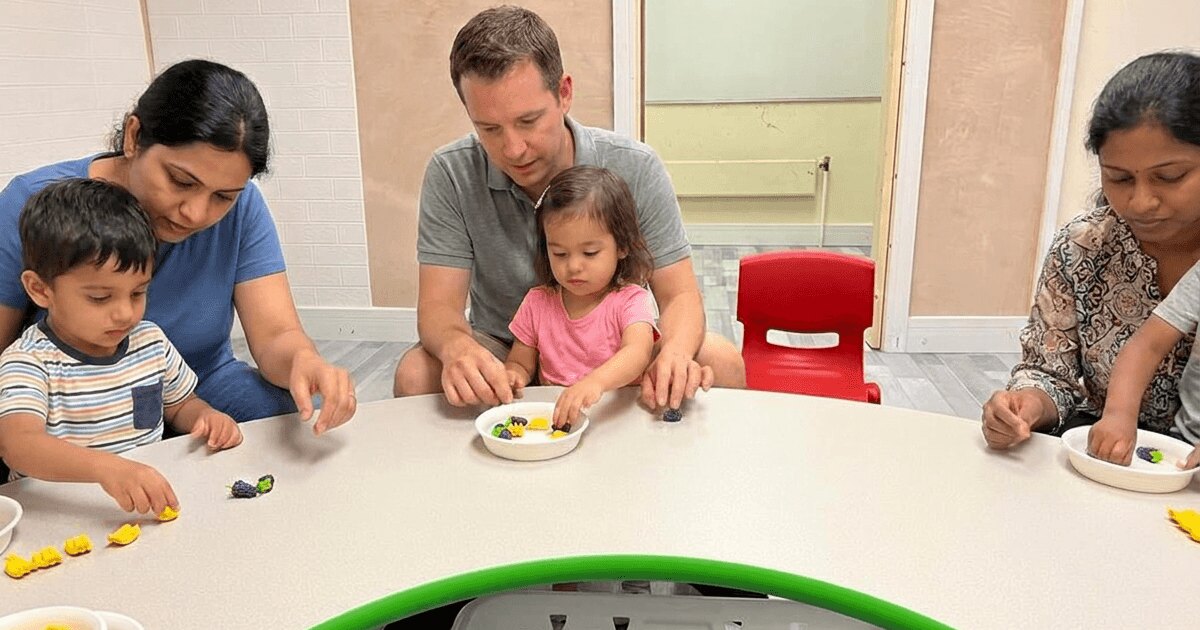
Format: Weekly 50-minute classes with a maximum of 6 children. Parents participate in every session, ensuring individual attention and quality parent-child time during structured play.
Evidence alignment: The method’s emphasis on right-brain stimulation aligns with neuroscientific research on the critical period for neural plasticity, including Roger Sperry’s Nobel Prize-winning research on hemispheric specialisation.
Best for: 0–12 years · Evidence-based parenting intervention · Social-emotional development
Incredible Years is one of the most rigorously evaluated early intervention programs in the world. Developed in the United States, it is widely used across the UK — particularly in Wales, where it is part of government-funded early years support. The program focuses on parenting behaviour, social-emotional learning, and self-regulation rather than direct academic or cognitive stimulation.
Strengths: Strong evidence base; reduces behavioural difficulties; widely available through NHS and local authorities.
Limitations: Primarily addresses social-emotional development; less focus on cognitive acceleration or parent-child academic engagement.
Best for: School-age children · Brain training activities · Online and in-person support
BrightMinds UK offers brain-based learning programs, resources, and activities for school-age children. Their approach draws on educational neuroscience to support memory, attention, and problem-solving skills through games, puzzles, and structured activities.
Strengths: Good range of take-home activities; suitable for older children; strong community and parental engagement resources.
Limitations: Less structured than program-based approaches; primarily aimed at ages 5 and above.
Best for: 0–5 years · Home learning support · Family-centred literacy and play
Peeple is a UK-based charity delivering evidence-based programs to support parents in nurturing early literacy and learning at home. Their flagship “Parents as Partners” and “Talk of the Town” initiatives focus on language development, early reading, and play-based learning in the home environment.
Strengths: Strong evidence base; community-focused; accessible for families facing disadvantage.
Limitations: Primarily literacy and language-focused; less emphasis on full cognitive development curriculum.
Best for: 2.5–6 years · Child-led learning · Independence and problem-solving
Montessori is a globally recognised educational philosophy based on the work of Dr. Maria Montessori. UK Montessori nurseries and pre-schools offer structured environments where children choose their own activities from a carefully designed range of materials, developing independence, concentration, and cognitive flexibility.
Strengths: Widely available across the UK; strong evidence for concentration and independence; respected by primary schools.
Limitations: Individual variation between settings is high; quality depends heavily on practitioner training.
| Program | Age Range | Format | Parent Involvement | Cognitive Focus | Evidence Base |
|---|---|---|---|---|---|
| Shichida Method | 6 months – 6 years | Weekly classes (max 6 children) | High — parents in every session | Whole-brain: memory, visualisation, focus, EQ | Neuroplasticity research; hemispheric specialisation |
| Incredible Years | 0 – 12 years | Group parenting program | High — parent-focused | Social-emotional regulation | RCT-validated; EEF-endorsed |
| BrightMinds | 5+ years | Classes and resources | Medium | Attention, memory, problem-solving | Educational neuroscience |
| Peeple | 0 – 5 years | Community groups; home support | High | Language and literacy | EEF-referenced |
| Montessori | 2.5 – 6 years | Daily nursery/pre-school | Medium | Independence, concentration, problem-solving | Long-standing evidence base |
If your child is under 2 years old: The Shichida Method is one of the few structured programs specifically designed for infants and toddlers, with sessions starting at 6 months. Most nursery-based options do not begin until age 2.5 or later.
If your priority is academic readiness by Reception: Shichida’s 4–6 years program directly targets reception readiness alongside the cognitive tools (working memory, focus, confidence) that underpin school success. Montessori settings also prepare children well for school entry.
If your child is showing social or behavioural challenges: Incredible Years is the most evidence-backed option for social-emotional development and is often available free through NHS or local authority referral.
If you want deep parent-child learning time: Shichida and Peeple are the strongest options for parent participation. Both treat parents as co-learners, not just observers.
If you want flexibility and home-based learning: BrightMinds and Peeple offer resources and activities you can use at home alongside any formal program.
Our recommendation
For parents seeking the most comprehensive cognitive development program from the earliest age, the Shichida Method offers a structured, age-banded curriculum starting at 6 months, with every session designed around active parent-child participation. No other program in the UK specifically targets right-brain stimulation, photographic memory, and emotional intelligence as a combined whole-brain curriculum from infancy.
The most effective programs combine parent involvement, age-appropriate stimulation, and small group or 1:1 ratios. For children from 6 months to 6 years, the Shichida Method is the most comprehensive whole-brain cognitive development curriculum available in the UK, targeting memory, focus, visualisation, and emotional intelligence through weekly parent-child classes of maximum 6 children.
The best parent-child learning programs in the UK include the Shichida Method (ages 6 months – 6 years, London), Incredible Years parenting programs (available across England and Wales), and Peeple’s family literacy initiatives. Each treats the parent as an active learning partner rather than a passive observer.
Consider your child’s age, your priorities (cognitive acceleration vs. social-emotional development vs. school readiness), and how much parent involvement you want. For children under 2, structured programs like Shichida are rare — most alternatives begin at age 2.5 or later. For social-emotional challenges, Incredible Years has the strongest evidence base.
The Shichida Method is grounded in research on early childhood neuroplasticity and hemispheric specialisation, including Roger Sperry’s Nobel Prize-winning research on left-right brain function. The program’s core premise — that the right hemisphere is dominant and highly receptive in early childhood — aligns with mainstream developmental neuroscience. Independent peer-reviewed trials specifically on the Shichida curriculum are limited; parents should evaluate it alongside their child’s individual developmental needs.
A strong cognitive development program should develop working memory (holding and manipulating information), executive function (planning, self-control, attention-switching), language and vocabulary, visualisation and spatial reasoning, emotional regulation, and problem-solving. Programs that address multiple domains simultaneously — as the Shichida Method does — tend to have the broadest impact.
Shichida UK runs classes in London for children aged 6 months to 6 years. You can book a taster session at shichida.co.uk. Incredible Years programs are available through local authorities and NHS trusts; contact your health visitor or local children’s centre. Montessori nurseries can be found through the Montessori Schools Association (montessori.org.uk).
Montessori is a child-led approach where children choose activities from a prepared environment, primarily from ages 2.5–6. The Shichida Method is a structured, adult-guided curriculum for children from 6 months to 6 years, with parents participating in every session. Montessori emphasises independence and self-correction; Shichida emphasises parent-child bonding alongside right-brain activation, high-speed memory training, and emotional intelligence.
Yes. Incredible Years programs are often available free through NHS referral or local authority early years services, particularly in Wales. Peeple’s family literacy programs are free in many areas. Some children’s centres offer free parent-child learning sessions as part of government-funded early years support. Structured programs like Shichida involve a fee; taster sessions are available.
This guide was written by the Shichida UK team and last updated August 2026. Shichida UK delivers the Shichida Method in Reading for children aged 6 months to 6 years. For questions about our program, visit shichida.co.uk or contact us directly.
Keep Reading
Five minutes at bedtime, done consistently, may be the highest-value habit in the whole method.
Read more
Wriggling, wandering, watching from your lap. Why none of it means the class is not working.
Read more
Practical, tested cognitive development activities from our classroom, adapted for a kitchen table and a five-minute window.
Read more